Sunday, February 27, 2011

Oscar 2011 Predictions

The Reel Deal's Oscar Predictions 2011

BEST PICTURE

Who Will Win: "The Social Network"


Who Should Win: "The Social Network". Challenging, relevant, cutting edge and forcefully infectious as pop art. Its place as a "generation-defining" film is yet to be determined, but as a personal drama, a story of a business venture, a portrait of singular vision and its repercussions (both wonderful and tragic), "The Social Network" is the best picture of this year, and one of the best of any other.


BEST DIRECTOR

Who Will Win: David Fincher for "The Social Network"


Who Should Win: Fincher is one of the best directors working today - in anyone else's hands, the masterpiece "The Social Network" is could have been overly didactic or romanticized with Aaron Sorkin's meaty script. He's been previously overlooked for "Zodiac" and passed over for "The Curious Case of Benjamin Button," so it'd only be right that his finest complete work to date is acknowledged.


BEST ACTOR


Who Will Win: Colin Firth in "The King's Speech"


Who Should Win: Jesse Eisenberg in "The Social Network"


Eisenberg's cold, calculating portrayal of Facebook's CEO may seem obsessed with trivial things. Some have even likened him to having Asperger's Syndrome. But it's the defiance in him that makes Mark Zuckerberg so compelling, along with his constant struggle with one idea and the toll it may take on the rest of his life. Eisenberg's richly nuanced performance shows us a young man doomed to be misunderstood, yet never backing down from raging against the academic, advertisement, or social machine.

BEST SUPPORTING ACTOR

Who Will Win: Christian Bale in "The Fighter"


Who Should Win: Bale is deserving of this award for his chameleon-like method approach to Dicky Eklund's mannerisms and frenetic intensity. He gives us moments of humanity when we're almost certain all his roads lead to failure, never once losing himself in the chance to make the character overly sensational.

BEST ACTRESS 

Who Will Win: Natalie Portman in "Black Swan"


Who Should Win: Portman has earned her spot in horror immortality in the twisted psyche of Nina Sayers. Her performance is at once calm and composed and wildly insecure and out of control, both sides colliding in perverse and extravagant beauty at the film's final bow.

BEST SUPPORTING ACTRESS 

Who Will Win: Melissa Leo in "The Fighter"


Who Should Win: Amy Adams in "The Fighter"


From her down-home look, to her vernacular, to her foolish, painful love for Whalberg's Micky Ward, Adams gets just about everything right as Charlene Fleming. Charlene's constant tug of war with Micky's volatile blood relative inner-circle for his attention and trust makes for "The Fighter"'s most emotionally charged and dangerous component. 

BEST ORIGINAL SCREENPLAY

Who Will Win: David Seidler for "The King's Speech"


Who Should Win: Christopher Nolan for "Inception". 


Nolan's absence from the Best Director category is a sham; the least that can be done is for the Academy to recognize the achievement of his bizarre and unique vision on paper.

BEST ADAPTED SCREENPLAY

Who Will and Should Win: Aaron Sorkin for "The Social Network"


On the surface it's a John Hughes movie by way of "Rashomon," beneath it's a timeless tale of universal resonance, in addition to raising its own very material-specific issues. Despite its being about a world of computer programmers and rich, entitled white males, "The Social Network" somehow manages to feel as massive as a gangster epic. With his witticism-a-minute linguistics, Sorkin demonstrates masterfully how to fictionalize true events in wholly immersive and uniquely relatable cinema.

BEST ANIMATED FEATURE

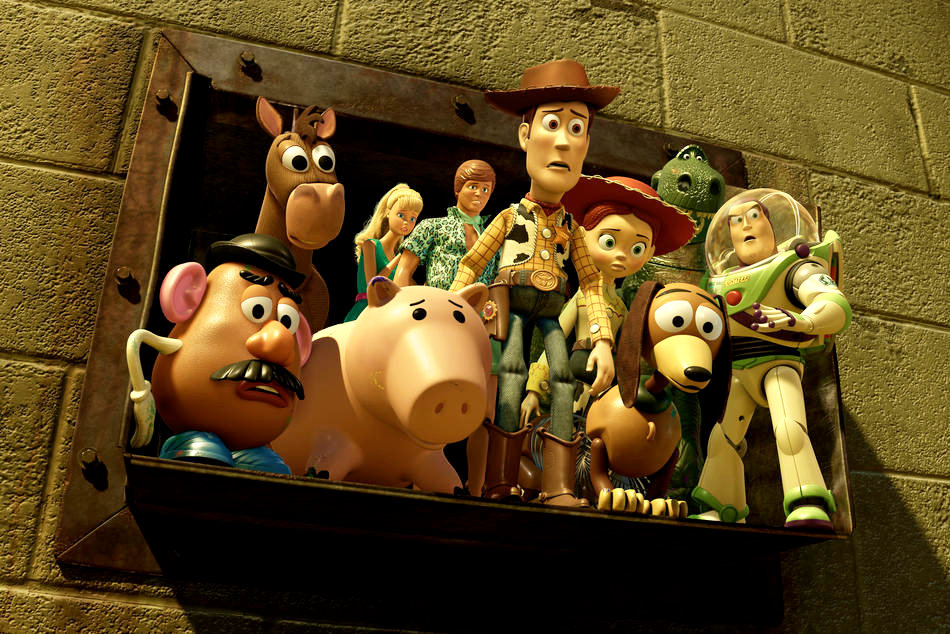
Who Will Win: "Toy Story 3"


Who Should Win: What other film but Pixar's manages to pull off themes of existential crisis while still being sweet, warm, funny and exciting at the same time? A perfect finale to Disney's classic trilogy.

BEST CINEMATOGRAPHY

Who Will Win: Roger Deakins for "True Grit"


Who Should Win: Wally Pfister for "Inception"


Though Deakins' work in "True Grit" is superb and will finally be rewarded after many years of overlooked collaborations with the Coen Brothers, Wally Pfister's in "Inception" has given us imprinting cinematic images that will hold up with time, and deserves to be recognized. Still, this is a very strong category that gives some nods to some terrific art-house flair (Matthew Libatique, "Black Swan"), as well as one that came unexpected (Jeff Cronenweth, "The Social Network") but would be completely justified with consideration.

BEST COSTUME DESIGN

Who Will Win: "The King's Speech"


This will inevitably take the category that holds two requirements: 1.) Film in question must be a period piece, having to do with Kings/Queens, and/or a British monarchy drama. 2.) Film in question should be poised for a big night.


Who Should Win: "I Am Love"


Antonella Cannarozzi's simple and elegant pieces offset the film's soothing palette and meticulous set composition, while resisting the urge to commit to a gimmicky use of "period" costumes.

BEST DOCUMENTARY FEATURE

Who Will Win: "Exit Through The Gift Shop"


Who Should Win: "Gift Shop" is a fascinating and brilliant first film from one engima of a street artist, Banksy, whom I doubt the Academy will miss the chance to give reason to attend.

BEST DOCUMENTARY (SHORT SUBJECT)

Who Will Win: "Poster Girl"

BEST FILM EDITING

Who Will Win: "The Social Network"

BEST FOREIGN LANGUAGE FILM

Who Will Win: "Incendies". It's shocking enough that the magnificent "Dogtooth" from Greece was even nominated. This is the favorite.


BEST MAKEUP

Who Will Win: Rick Baker for "The Wolfman"


BEST ORIGINAL SCORE

Who Will and Should Win: Trent Reznor and Atticus Ross for "The Social Network".

Right around when Eduardo (Andrew Garfield) enters the room and Mark (Jesse Eisenberg) demands the algorithm he uses to rank chess players for the purposes of publicly humiliating Harvard's entire female student body, Reznor and Atticus's gnashing electro-synths kick in and we know we're in for something bold, punk rock and subversive. Other moments hold equally as powerful, some sexy, some haunting, some fierce, all moving with propulsive grandeur.

BEST ORIGINAL SONG

Who Will Win: "We Belong Together" from "Toy Story 3"

BEST SHORT FILM ANIMATED

Who Will Win: "Day & Night"

BEST SHORT FILM (LIVE ACTION)

Who Will Win: "Wish 143"

BEST SOUND EDITING

Who Will Win: "Inception"

BEST SOUND MIXING

Who Will Win: "The Social Network"

BEST VISUAL EFFECTS

Who Will Win: "Inception"

BEST ART DIRECTION


Who Will Win: "Inception"


Friday, February 25, 2011

FANGORIA #301

DRIVE ANGRY and some of the best killer-car films from whence it came, Michael Wadleigh's retrospective on WOLFEN, a lengthy, revealing interview with horror and pop culture legend Richard Matheson, a cool chat with Jorge Michael Grau on his cannibal opus WE ARE WHAT WE ARE, and a fun revisiting of several of Jim Wynorski (CHOPPING MALL)'s films by Wynorski himself. 


FANGORIA #301 is quite the issue and it's on shelves now. You'll also find my words on a modern slasher variation of Hansel and Gretel called BREAD CRUMBS, along with allusions to a future Nic Cage mash-up cover (!). "...Really, who wouldn't want to see a painted cover image of Cage grinning madly with dime-store fangs in his maw, like his character Peter Lowe in Robert Bierman's Vampire's Kiss, his head on fire like Ghost Rider and wearing a snakeskin jacket like Sailor Ripley  in David Lynch's Wild at Heart? OK, maybe some of you do not want to see this, but dagnabbit, mark my words...it will happen one day." I know I do.

Wednesday, February 2, 2011

FANGORIA #300

A slew of transitional kinks and bugs have been and continue to be worked out in progression at Fango; now reception has been overwhelming for February's issue, which reads more like a reference book than magazine. The 300th issue offers up a distinctly unique tricentennial, with the cover going decidedly retro for the occasion. In it you'll find my words on "Hatchet" and "The Last Wave," along with the rest of the staff's on some of the most obscure and upstanding genre works of the century. Many of horror's most prolific actors and filmmakers muse on their own personal favorites as well, giving insights into their art and inner-fan.


"This is a kind of reference guide to not only FANGORIA's storied history, but the history of dark cinema full stop, penned not from a stuffy know-it-all academic perspective but from the point of view of individuals who fell in love with horror when they were young, have devoted their lives to all things weird and wonderful and have never, ever felt any class of shame when flying their saturated, garish flags."

- Chris Alexander

Saturday, January 29, 2011

The Reel Deal's Best of 2010

The 10 Best Films of 2010

1.) "The Social Network"

David Fincher has taken the repressed masochism of his 1999 “Fight Club” and transposed it to the elite WASP jungle of Harvard University and beyond. From its opening reel, we bear witness to machine gun barrages of dialogue between scripter Aaron Sorkin’s cold, calculating characterization of Facebook CEO Mark Zuckerberg (Jesse Eisenberg, never better) and a quasi-fictional girlfriend Erica Albright (Rooney Mara) that lure us in with cinematic smartassdom, then pull back to reveal stark undercurrent s of isolation and ambiguity. This tale of the founding of our most influential social networking website and its almost eerie pervasion in the state 21st century communication compels on all levels; the cast – Andrew Garfield, Armie Hammer and Justin Timberlake, among others – is uniformly excellent, their performances all the more intensified by Trent Reznor and Atticus Ross’ alternately propulsive and haunting ambient score.


* In the Blu-Ray package’s loaded making of featurette, Eisenberg muses on the frustrating but rewarding aspects of Fincher’s cryptic, “esoteric” mode of speak on set; it’s confirmed throughout the director’s feature commentary that this is no understatement. Still, the film’s bravado is undeniable, and makes the supplemental features satisfying and illuminating across the board. Widescreen format and 5.1 DTS-HD both pristine.  ★★★★★ (5/5)

2.) "Black Swan"

Multi-layered, sharply self-referential tale of artistic obsession that never shied away from flourish. The most sumptuous of Aronofsky's work to date, with a bravura performance from Natalie Portman. Review here.  ★★★★★ (5/5)


3.) "Toy Story 3"

Oddly existential and pure at heart. There's just something good about this one.


There are those moments (though not too often) when we sit in a theater and find ourselves in a collective harmony that's both refreshing, and, in a more reflective sense, lingering with a warm and fuzzy resonance that follows us out the door, even after the credits have rolled. I saw "Toy Story 3" with lifelong friends of mine. After we walked out, one of them began to discuss a younger brother's return to the careless summer months, and mentioned his lamenting the sudden shift from school lunches to sandwiches made at home. Before I could snap into that harder reflex of reality, the one that laughs off, dismisses and trivializes such concerns, something happened - we smiled. For those smiles, I hold "Toy Story 3"'s virtuous allusions to childhood wonder responsible.  ★★★★★ (5/5)


4.) "True Grit"

"True Grit" precedes its first moments with the Biblical proverb, "The wicked flee when none pursueth," and those words are echoed nearly the whole way through. Through the whiplash narrative of 14 year old Mattie Ross (Hailee Steinfeld) we are made known of the man who killed her father, Tom Chaney (Josh Brolin). Mattie's pursuing Rooster Cogburn (Jeff Bridges), her ideal choice for hire as an accomplice to her vengeance. LaBoeuf is pursuing Chaney over a murder several months prior.  "Lucky" Ned Pepper (Barry Pepper) and his gang are pursuing Mattie and Rooster in their own vendetta. Cat-and-mouse chase of a high order from the Coens by way of tight, gripping and poetic Western homage. ★★★★☆ (4/5)


5.) "Inception"

One of the boldest, ballsiest big budget blockbusters perhaps of all time, completely unafraid to stimulate the senses and challenge the intellect simultaneously. Review here.  ★★★★★ (5/5)


6.) "Let Me In"

"Let Me In" could have well been the words uttered by its writer/director Matt Reeves, in an appeal to justify having made a film (based on Tomas Alfredson's 2008 "Let The Right One In") both light and dark, frigid and warm, painful and touching - and yet not cut from a cloth entirely its own. “Let me in contention with that first film,”  Reeves’ adaptation begs us to consider, “or at least let me stand alongside it.” It's a request worth granting, though not only on the grounds of the film's visual style, which is also present in abundance.  Reeves' impulse to photograph his winter-bound mise en scène to present a tale of true androgynous beauty is chilling and mysterious, while still averting any tactics of manipulation to appease the salivating masses of sappy Twi-hard vamp admirers. In its universe exists no “Team Abby” (Chloe Grace-Moretz) or “Team Owen" (Kodi Smit-McPhee), but an intimate snapshot transcending romantic pretension and superficiality. ★★★★☆ (4/5)


7.) "Enter the Void"

French provocateur Gaspar Noe (Irreversible)'s "Enter the Void" opens with an AD/HD ridden cinematic kick to the gut, flashing lights so bold, bright and primeval they'd make even Kanye West blush. This is the director’s first test. Presenting us with all his simulated acidic hallucinations (at about 3 title cards per second), we understand just what kind of a trip we’re strapped in for, and can choose whether to enter with gleeful abandon, or simply stay clean and sober.


The filmic equivalent of "taking the red pill," Noe's vision is likely the most relevant portrait of aimless existence since "Boogie Nights," and a trip down a nihilistic rabbit hole all its own. Its take on life, love, sex, drugs and death (not necessarily in that order) is at times turn-offishly cynical, but its audacity lies in the presentation: it's a trip you can't stop from happening, whether you like it or not. This is powerful filmmaking.  ★★★★☆ (4.5/5) 


8.) "Exit Through The Gift Shop"

Docudramatic true story about how a single act of fanaticism can create - or be mistaken for - art. Enigmatic street artist Banksy's marvelous first film effort is as hilarious as it is perceptive, as it observes the growth of a modern movement, its most prominent figures, its run-ins with the law....and Thierry Guetta. To some, the filmmaker-turned-spray "artist" Guetta may be a national treasure, to others (including the street legends he once compulsively filmed) he's a slap in the face. As many continue to speculate street art's role as either important contemporary work or flashy gimmick, the questions the film raises about Guetta's own artistic worth in this "barely legal" cultural crusade are as relevant to this one man as they are to the movement itself.  ★★★★☆ (4/5)


9.) "Cyrus"

Any other director(s) than Mark and Jay Duplass might have made "Cyrus" a hackneyed screwball comedy. Any other actors than John C. Reilly, Jonah Hill and Marisa Tomei might have made it an indie dramedy too quirky for its own good. "Cyrus" doesn't sacrifice on either end, and the result is hilarious, weird and kind of remarkable.   ★★★★☆ (4/5)


10.) "Scott Pilgrim VS. The World"

Scott Pilgrim is that fragment of our psyches that allows our ID to trump our ego every time out.   Everyone around him seems certain he is in peril, yet Scott ignores this with reckless abandon, because he addresses the shortcomings in his life as a way of fueling his fires.  Film critic Elvis Mitchell described it during his interview with Edgar Wright on his radio show "The Treatment" as "slacker narcissism".


Finally, someone has captured that slippery persona of Michael Cera and allowed it to truly shine.  "Scott Pilgrim" is no prepackaged comedy "vehicle," it's the sensibilities of an apt director with the kind of infectious conviction that elevates material like this.  Consider one scene in which he is approaching a battle with two of Ramona's evil exes, the Katayanagi Twins (Shota and Keita Saito), Kyle and Ken respectively.   Scott stares off into space during his band's practice, as he plucks at his bass into the void that is his quietly reserved, laid back mania.  He then assures his lead singer Stephen Stills (a grungy, exuberantly dopey Mark Webber), "I play better when I'm in a bad mood." Scott finds himself amidst one hell of a love triangle, and its participants teeter that fine line that boyfriends, girlfriends, exes, friends, lovers, often do.  The movie looks at its subjects as people caught in the messy cross-woven webs of their courtships as a game, and is it ever. Edgar Wright's film is probably destined to stay contained in its cult following without much cross-over, but the performances (particularly Winstead's and Wong's) will catch anyone off guard, and its core is endearingly sweet.  ★★★★☆ (4/5)


Underrated


"Frozen"


The first film to force this jaded lover of horror to physically recoil during its running time. Adam Green's blue and white palette accents "Frozen's" potent horror cocktail - blue-collar story blended with white-knuckling anxiety - as much as it does its ominous winter backdrop.  The film reels in the terror through subtlety, amped up insanity and the power of suggestion - each equally effective as the next - without ever condescending to Dan (Kevin Zegers), Joe (Shawn Ashmore) or Parker (Emma Bell) in the midst of their predicament. These three are witless teen archetypes, yes. Do these kind of people actually exist? Yes.  On a first viewing, submit yourself to this one and prepare to be drained. On a second, show it to friends and watch them lose it.   ★★☆☆ (3.5/5)


"The Last Exorcism"

A nasty, deceptive, superbly crafted little film.  Well, actually, between the dogged promotion of producer Eli Roth and the sweeping implications of its final moments, it's not a little film at all.  Yet it is ingenious in the way it manages to feel so small, so isolated when stripped down its bare essentials, which are completely obvious in retrospect, but concealed with a sinister platitude.  ★★★★☆ (4/5)


Honorable Mention: "Dogtooth", "The Fighter", "Shutter Island"


Wednesday, December 8, 2010

Fangoria #299

Since my entry into the FANGORIA staff in late August, I've been nothing short of ecstatic to be covering the beat of the melding of class and trash, sleaze and beauty more formally known as the horror genre. FANGORIA #299 is now on shelves, with a cover story dedicated to Darren Aronofsky's "Black Swan." The magazine has been making some incredible strides and interesting revamps, some completely fresh and others returning back to cherished and seemingly (though only temporarily) lost roots.


In addition to an in-depth look at Aronofsky's psycho-thriller, horror fiends will also find set coverage of Jim Mickle's "Stake Land," a nice look at Sage Stallone (son of Sylvester)'s adamant revival of Grindhouse Releasing, an interview with French auteur Jean Rollin, and can find my review of the recent Aussie creature feature "The Dark Lurking" at Dr. Cyclops' Dungeon of Discs.

"Black Swan" (2010)

  Darren Aronofsky's "Black Swan"never once reveals exactly what it is, which is ironic. The film's wildly unrestrained psychosomatic narrative is devoted to subjectivity, free to romp in artistic grandeur, though it's crafted around one calculating, rigidly disciplined performer who can't allow her mind to be free for a second. The young woman is Nina Sayers (Natalie Portman), and her passion and elegance is apparent as we observe her daily routine - her walk from the humble apartment she shares with her loving, if not coddling mother (Barbara Hershey) to her New York City ballet company, run by one formidable director Thomas Leroy (Vincent Cassell). It is here where Nina will thrash out the limbering precision of her dance regiments, in preparing for the company's production of Tchaikovsky's Swan Lake, for which swarms of students covet the lead of Swan Queen. Leroy acknowledges that the ballet has been done ad nauseam, but this time it's going to be "stripped down, raw, visceral;" "Black Swan" brilliantly encompasses the concise leanness of Leroy's approach along with its sinister facets that lie beneath.

  It is nominally a hybrid adaptation of Dostoyevsky's novella The Double and Michael Powell and Emeric Pressburger's 1948 balletic opus The Red Shoes, yes, and how paranoia and competition can dwindle away at the most committed of minds under the portent of pressure. But just as Rosemary's Baby - a seminal film for Aronofsky which the director publicly cites to be of major influence - was less concerned with the occult than with the perils of invested trust, so too is "Black Swan" devoted to greater thematic layering. It is a fascinating portrait of obsession, a film that sees the disturbing hum of anxiety in the physical manifest - thus the players in this gorgeously twisted world become slaves to the life-long audition from which they cannot escape.

 A cunning balance of seduction and sweetness with unsettling repulsion, "Black Swan" works effectively as dynamic melodrama before taking a wicked turn into Cronenbergian horror-fantasy. Natalie Portman anchors this expertly as the fragile, innocent young talent navigating her way down the darkest corridors of sexuality and the looming threat of failure. Nina is suffocated by the expectations of all those around her to embody both the White and Black Swan - the former being her perfect match, the latter evading her grasp. That she is challenged for the dual role by the presence of a more naturally "free" Lily (Mila Kunis) only accelerates the rapid pace of her fears, which soon begin to surface skin deep.

  Empathy for Nina might have been hard to find in a world this insular, but Portman's fearless performance along with the same knack for minutia and realist grit of Aronofsky's 2008 The Wrestler allow the material to transcend in a lavish romp that begs us to surrender to its dazzling visual splendor. Hand in hand with Aronofsky's apt study of the athleticism of the human body, we observe Nina's identity slowly begin to rear its freakish, other-worldly head - only to snap back with lightning speed to the hallucinatory discovery of her bodily desires.


  Two minor female roles - Hershey as Erica Sayers and Winona Ryder as womanizing Leroy's former "little princess" Beth Macintyre - cleverly craft the picture's lingering tales of the original story's traditional "dying swan" element without relying too heavily on overt plot points. Both women, in their jealousy and obsession to live vicariously through the ballet that offers Nina the ideal career, underscore the political tensions that come along with any modern backdrop of competition. Erica listens and supports, but pushes and antagonizes once too far, while Beth's long-gone days as Swan Queen remain all too foreboding of Nina's hellish descent into madness.

  As we check in and out, along with Nina's mind, to the internal, hushed sounds of buzzing audiences, the picture lulls deeper into absurdity, and by the third act the film asks us to check all rationale at the door. Though in this case, the sensationalist flair with which Aronofsky crafts "Black Swan"'s final choreography sequences (gorgeously staged by Benjamin Millepied) along with frequent collaborator Clint Mansell's masterful arrangement of Tchaikovsky's original score make the stunning rite of passage all the more poignant, never bordering on potential camp territory.

  "Black Swan"'s ability to polarize audiences will ultimately lie in how its maker's utter disregard for restraint or conventional form will sit with those on the receiving end. It is a film that refuses to sit still and commit to certainty, but in this case that's hardly a criticism. The tragedy of Nina's blind ambition will remind the film's lovers and detractors that perfection, if it can be reached at all, cannot be reached without a leap of faith.

★★★★ (5/5)


Cast & Credits

Nina Sayers/The White Swan: Natalie Portman
Lily/The Black Swan: Mila Kunis
Thomas Leroy/The Gentleman: Vincent Cassel
Erica Sayers/The Queen: Barbara Hershey
Beth Macintyre/The Dying Swan: Winona Ryder

Fox Searchlight presents a film directed by Darren Aronofsky. Written by Mark Heyman, Andrew Heinz and John McLaughlin. Running time: 108 minutes. Rated R (for strong sexual content, disturbing violent images, language and some drug use).


This review originally published in Vol. 90, Issue 13 (Dec. 9, 2010) of The Montclarion

Monday, September 6, 2010

"Centurion" (2010)

   Neil Marshall's "The Descent" was about a group of friends who lived to take risks, and were proud of them - yet they either never lived to tell their tales, or wouldn't dare speak of them after they had survived.  Here is his latest, "Centurion", which is about the legendary Ninth Legion, a group of men who risked their lives in great peril every day, and again not much of anybody knew of the dangers they faced, nor the value of their lives.

  When "Centurion" opens up, we meet Quintus Dias (Michael Fassbender).  He's the sole survivor of some vicious raid by the Picts, the only group more savage and gruntingly brutish than his own legion.  There is some introduction after the film's opening credits - complete with what's probably best known in epics as the "helicopter introductory nature shot" - whose job is to create the illusion that what's going on here involves some kind of high stakes.  "AD 117.  The Roman Empire stretches from Egypt to Spain, and East as far as the Black Sea".  Already, the obligatory historical rundown that prefaces such a stripped down film feels out of place, trailer-ready to pander to a formula that had me wishing for more of Marshall’s unrelenting claustrophobic horror, rather than his pre-occupation with displacing it in ancient middle Earth.

  Then again, there are two arguments for and against the  historically prolific accessories known as "swords and sandals", and taking a pro or con stance ultimately will depend on what you value more:  the part that's historical, or the part that's prolific.  Return to a swords-and-sandals epic and you will find yourself in all too familiar territory:

  One man - decidedly of militaristic importance and stature - lies in the center of clashes of violent dispute in ancient Rome, then finds himself torn apart by captivity, love triangles of messy sexual tension, and a moral quandary that could probably make dying on the battlefield a pleasing, more convenient alternative.

  He also presumably holds his base of knowledge of the genre within the confines of those tired Roman soldier films - among them "Gladiator" and "300",  - which some I imagine will find to be homage with an adept level of respect.  What "Centurion" is, is an exercise in style that recycles what it perceives to be authentic, and that becomes sort of hit or miss.

  To start, Neil Marshall approaches his mythology with the same kind of awe and curiosity a kid staying the night at a friend's house telling a local urban legend has.  In that way, it's hard to resist.  One great shot of the Legion in battle sees flaming boulders closing in from every which way, mirroring that smothering paranoid feeling Marshall managed to get from those caves in "The Descent". 

  Marshall clearly understands that what we can conjure up in the darkness of our imagination - whether that's a vicious throng of monsters at the bottom of an unexplored cave, or a troupe of Roman soldiers whose fate is swept of recorded documentation - is most compelling when placed in a fragment of reality; the journey of backpacking young women or the waging battles of the vast Roman empirical struggle.   Where the film falls flat, is when that aura within the context of historical legend becomes essentially removed, replacing something so potentially rich in lore with highly stylized limb-hacking choreography.  Translated into horror, that paranoid hysteria is most effective when unexplained, but in “Centurion” the action begs explanation.

  The film's strictly black and white characters also have a curious way of glossing over anything reminiscent of real dimension.  Many of them, including Roman-epic veteran Dominic West as General Titus Flavius Virilus (there’s a mouthful) act as pawns in some cruel game rather than human beings.  Marshall no doubt relished in the opportunity to dress down, ugly up and make a brute out of Olga Kurylenko, here playing Etain, the merciless and deaf Pict warrior whose makeup looks plucked out of a missing Joel Schumacher “Batman” installment.  We’re told at some point that her motive is vengeance on behalf of her murdered family.  I had trouble seeing more than the anger and brooding called for in an almost entirely silent and wasted role.

  What I found myself repeatingly asking was a matter of the great moments that could arise out of a story willing to report unwritten history.  Was every Pict simply a ruthless sadist?  Every Roman a man of honor and glory?  Where are those Romans whom secretly despised the civilization that forced them to fight to fatten their emperor, instead of blindly obeying it?  When will we see a movie about them?  Or maybe with "Centurion" we have, we just haven't seen it illustrated in any way beyond ancient Roman, swear-injected fraternizing and the bonding through their bloodshed that’s become so commonplace in a marketplace dominated by the interests of the modern bro-dude’s Facebook page.

  The film's Video-On-Demand offering - compatible with video game consoles Xbox 360 and Playstation 3 - illustrates pretty clearly the audience Marshall's film will be tapping into.  Sure, some pumped up, avid gamers hooked on a role playing game like God of War would likely enjoy taking a break from their game-play to download it on their consoles and watch it re-enacted, and "Centurion" is a well made representation of its own cornered genre.  It is lean, concise fare whose business is fetishizing brawny, overbearing male archetypes and their exploits, which mainly consist of pillaging, mutilation and total conquest.   My question watching was, didn't we just get all that playing the game?

★★☆☆☆ (2.5/5)

Cast & Credits

Centurion Quintus Dias:  Michael Fassbender
Commander Gratus:  Andreas Wisniewski
Vortix:  Dave Legendo
Aeron:  Axelle Carolyn
General Titus Flavius Virilus:  Dominic West
Etain:  Olga Kurlenko

Magnet Releasing Presents a Film Written and Directed by Neil Marshall.  Running time: 97 minutes.  Rated R (For Sequences of Strong Bloody Violence, grisly images and language).


You can find this review, its supplemental materials, as well as other extensive film coverage at EInsiders.com.